T5 aluminum vs T6 aluminum (Latest Update)

T5 aluminum vs T6 aluminum

T5 aluminum vs T6 aluminum

T is short for Temper. What we talked about was the T5 and T6; it is actually the type of heat treatment. 

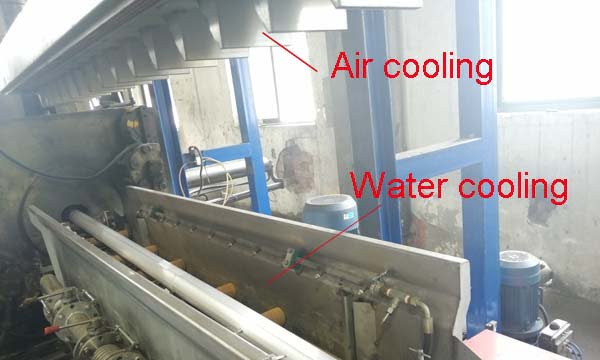
T5 is the aluminum extruded profile from the extruder, with rapid cooling of the air-cooled aluminum (Webster Hardness hardness8–12).

T6 is the aluminum extruded profile from the extruder, with instantaneous cooling water aluminum, the aluminumto achieve higher hardness (Webster Hardness above13.5). 

Today we would like to talk about the solar panel frame material – 6000 series aluminum. Especially 6063 and 6005 aluminum materials.

6000 Series is an aluminium-magnesium-silicon alloy. Its representative mark has 6061 Alloy, 6063 Alloy, and 6082 Alloy. Unlike other 7000 series aluminum alloys, the 6000 Series aluminum plate is mainly in T temper, and the most commonly used are T5 and T6. What is the difference between the two T5 and T6?

Difference between T5 aluminum vs T6 aluminum

Before explaining the difference between aluminum solar frame material 6063 T5 and T6 for solar panels, users must first understand the following two definitions:

Aging: The process of eliminating internal stress in metals.
Quenching: The metal is heated to a certain temperature and suddenly cooled to meet the required hardness. The strength of 2, 6, and 7 series aluminium sheets can be increased by quenching treatment.

T5 means that the temperature of the aluminum solar frame is rapidly lowered by air cooling after extrusion from the extruder to meet the required hardness requirements (Wechsler 8-12 hardness). T6 refers to the instantaneous cooling of the aluminium solar frame by water cooling after extrusion from the extruder, which makes the aluminium sheet meet higher hardness requirements (Wechsler hardness 13.5 or more).

Air-cooled cooling takes a long time, usually 2-3 days, which we call natural aging, while water-cooled cooling takes a short time, which we call artificial aging. The main difference between T5 and T6 states is strength. The strength of the T6 state is higher than that of the T5 state, and other properties are similar. In terms of price, because of the difference in the production process, the price of T6 aluminium sheet is a little higher than that of T5 aluminium solar frame per ton.
difference between T5 and T6 of 6063 aluminum

Mechanical properties difference of T5 aluminum vs T6 aluminum

Below are the mechanical properties of 6063 aluminum alloy, which after T5 and T6 treatment.

Aluminium Alloy         & Temper

Thickness

mm

Tensile Strength
Rm/Mpa
Yield Strength
Rp0.2/Mpa

Elongation /%

A

HBW
6063-T5≤3.0017513065
>3.00-25.00160110765
6063-T6≤10.0021517075
>10.00-25.00195160875

Although the two tempers are different in definition, there is not much difference between the 6063 alloys, but mainly reflected in the difference in mechanical properties. T5 is generally air-cooled and naturally cooled during quenching in aluminum profile plants. T6 is cooled by water to cool the aluminum material instantaneously so that the aluminum profile can reach higher hardness requirements. T6 temper is associated with better mechanical properties in strength, elongation, and hardness, and its price is also higher than the cost of T5.

Considering the usage of your final product, if the material requirement for strength and hardness is relatively high, the T6 temper can be selected, and if there is no particular need for strength and hardness, the T5 temper can be chosen.

How to keep the machining performance for solar frame material

During the production process, due to the heat and extrusion, the density between the crystals is not uniform, and the energy is not fully released and stored in the inner part, which is called internal stress.

The existence of internal stress will affect the next deep processing, such as bending, stretching, stamping, etc. If the internal stress is not released in advance, it will easily cause the bending of aluminum profiles, wave patterns, and surface inequality.

The process of eliminating internal stress is very simple. After the aluminum profiles go down the assembly line, add a process: use the machine to stretch them, then release the energy inside.

stretch the aluminum profile

Conclusion on T5 aluminum vs T6 aluminum

T5 aluminum can be used for common usage of aluminum profiles and solar frames, but if you have special requirements for aluminum profiles’ strength, we insist on using T6 aluminum to make it, and it also has better performance on machining performance.

Structural Optimization in Solar Infrastructure: Engineering T5 vs. T6 Aluminum Profiles (2024-2026)

When translating the T5 vs. T6 temper debate into modern utility-scale solar asset protection through 2026, engineers must balance mechanical yield strength with extrusion cost and geometric precision. Both tempers belong to the heat-treatable 6xxx series (primarily 6063 and 6005 alloys), but their cooling and aging phases dictate their performance in the field.

T6 aluminum undergoes solution heat treatment followed by artificial aging, reaching an exceptionally high tensile strength. However, the intensive quenching process required for T6 can induce residual stresses, causing minor geometric distortions in ultra-precise, thin-walled profiles. On the other hand, T5 aluminum is cooled directly from the high-temperature shaping process and then artificially aged. This state yields outstanding dimensional stability, exceptional corrosion resistance, and excellent surface finishes—making it the ideal global standard for continuous extrusion.

In utility-scale photovoltaic infrastructure, selecting the proper temper is a highly engineered choice:

  • The Standard 35mm Solar Frame: For high-volume manufacturing of the standard 35mm solar frame, 6063-T5 or 6005-T5 provides the perfect mechanical balance. T5 ensures that the intricate internal locking tracks and screw holes remain dimensionally flawless to micron-level tolerances. Over a 25-year lifespan, a properly optimized T5 aluminum frame provides more than enough wind and snow load resistance, outperforming flexible alternatives like the newly introduced PU composite frame, which suffers from long-term material fatigue.

  • Heavy-Duty BIPV Structural Rails: For specialized Building-Integrated Photovoltaics (BIPV) where profiles act as critical load-bearing building elements, custom-hardened 6005-T5 or customized high-tensile tempers are deployed. In complex configurations involving the BIPV solar panel frame top rail or specialized double glass solar frame profiles, these engineered T5/T6 variations ensure zero structural sagging while providing a perfect anchor against severe urban aerodynamic wind loads.